
The Doctor of Spinalonga: Emmanouil Grammatikakis, 1924 to 1952
Table of Contents
Introduction
For 28 years, a single man held nearly all authority on Spinalonga. Emmanouil Grammatikakis arrived on the island in 1924 as its chief and only doctor. He was at the same time its director, its judge and its chief of police, and he kept those roles until 1952, according to the audio archive of the Ephorate of Antiquities of Lasithi.
Spinalonga operated as Greece’s leper colony from 1903 to 1957, on a small island off the village of Plaka in the Gulf of Elounda. At its peak in 1933 it held 954 people diagnosed with Hansen’s disease, the illness then known as leprosy, according to records held by the International Leprosy Association. For much of that period the Greek state provided little steady medical care.
How the colony began
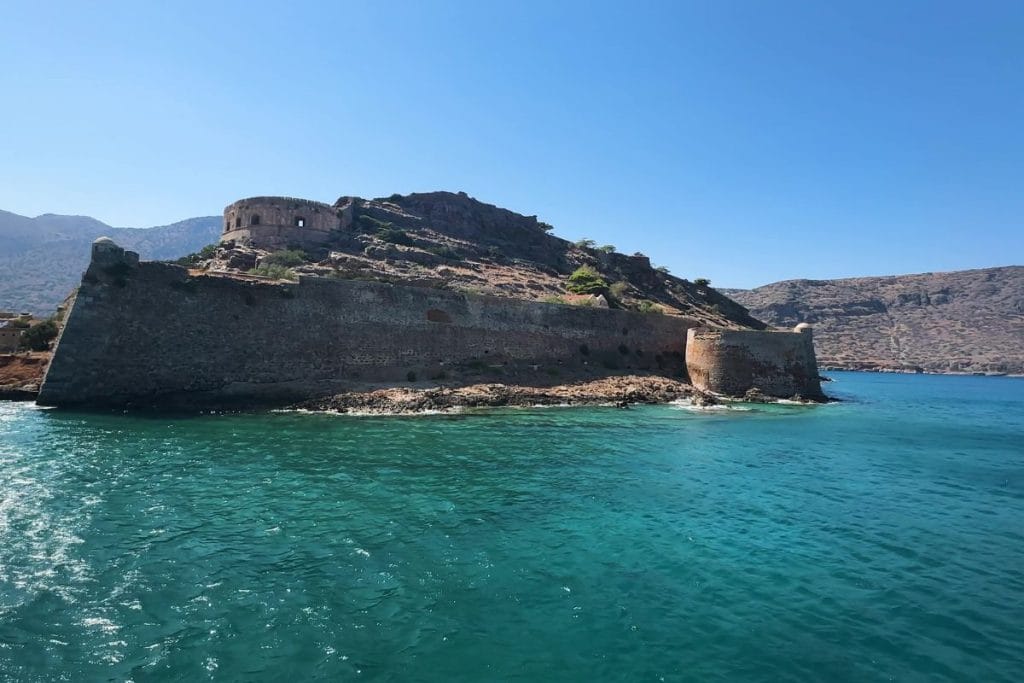
The colony’s origins lay in an official report. In 1900 the Cretan State, under the High Commissioner Prince George, invited two foreign doctors, Ehlers of Copenhagen and Kanheim of Dresden, who with the Greek physician Mylogiannakis recommended isolating leprosy patients on an island. A law of 30 May 1903 named Spinalonga, and the first 251 patients were transported there in 1904. The move also forced the last 272 Muslim residents off the island, a long-standing aim of the Cretan State.
A colony without a resident doctor
In the early years, medical attention was minimal. The doctors assigned to the colony lived on the mainland, in Agios Nikolaos or in their home villages, and crossed only from time to time. Epaminondas Remoundakis, a law student who arrived as a patient in 1936, later described that care bluntly. “The medical care provided was insignificant, because the doctors did not live there, but in Agios Nikolaos or in their villages,” he said, in testimony recorded by the Swiss ethnographer Maurice Born.
The neglect was recorded at the time by officials. In a 1926 memorandum to the Ministry of Health, the prefect Anagnostakis wrote that 250 people had been isolated, or more accurately dumped, on the dry rock of Spinalonga in deep despair. His report described their houses as hovels and called their condition an outrage to any civilised conscience.
Conditions began to improve slowly. From 1929 the Cretan Anti-Leprosy Association pressed for change, and an infirmary and washing facilities were built. The state also constructed new houses during the 1930s to replace the worst of the old Ottoman ruins.
One man, four offices
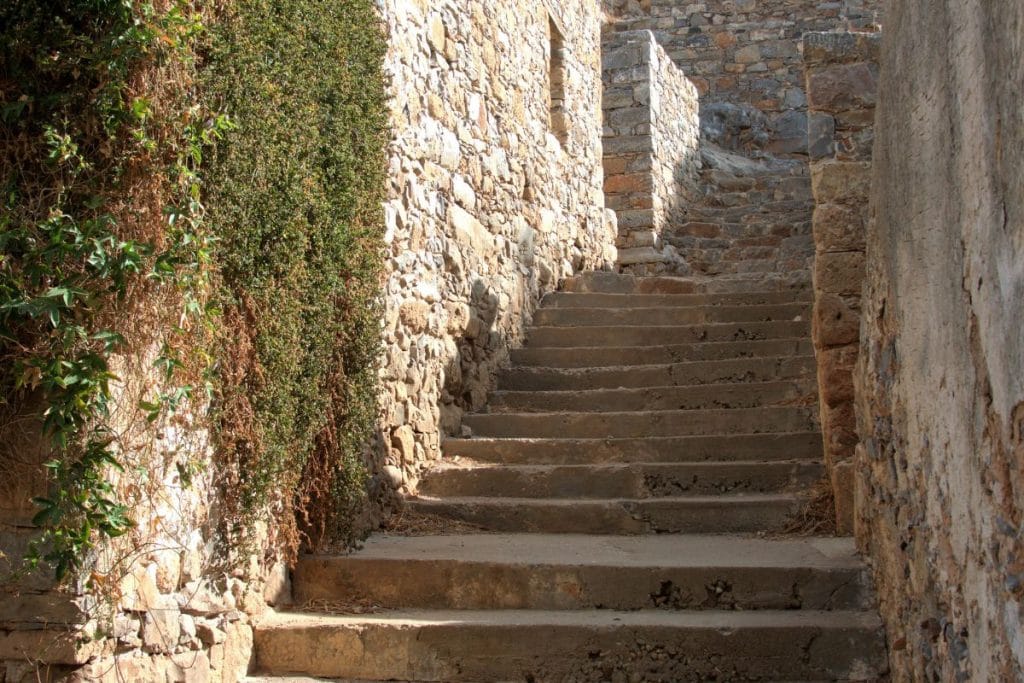
Emmanouil Grammatikakis changed the arrangement mainly by staying. From 1924 he combined the posts of doctor, director, judge and police chief, and in practice governed the island. Toward the end of his service he was also appointed district medical officer for the wider county. The concentration of so many offices in one person shows how far the colony sat from the reach of the Greek state.
As director he controlled the budget and the allowance the state paid for each patient. As judge and police chief he settled the disputes of a crowded community that had its own shops, cafes and, later, its own elected patients’ association. Few officials anywhere held such complete authority over so many lives.
There was no cure for most of his tenure. The first effective treatment, the sulfone drugs, reached Greece only in 1948. Until then Emmanouil Grammatikakis registered arrivals, recorded deaths, settled disputes and signed the paperwork that governed hundreds of lives.
The war on an isolated island
During the Italian and German occupation of Crete between 1941 and 1945, the colony’s isolation became a form of protection. Occupying soldiers refused to set foot on the island for fear of infection.
According to local historical accounts, Emmanouil Grammatikakis used a radio set to copy news bulletins from London and Cairo and passed them to residents. In 1942 Remoundakis rang the church bells despite an Italian ban, to warn the mainland of danger, the Ephorate’s archive notes.
After Emmanouil Grammatikakis
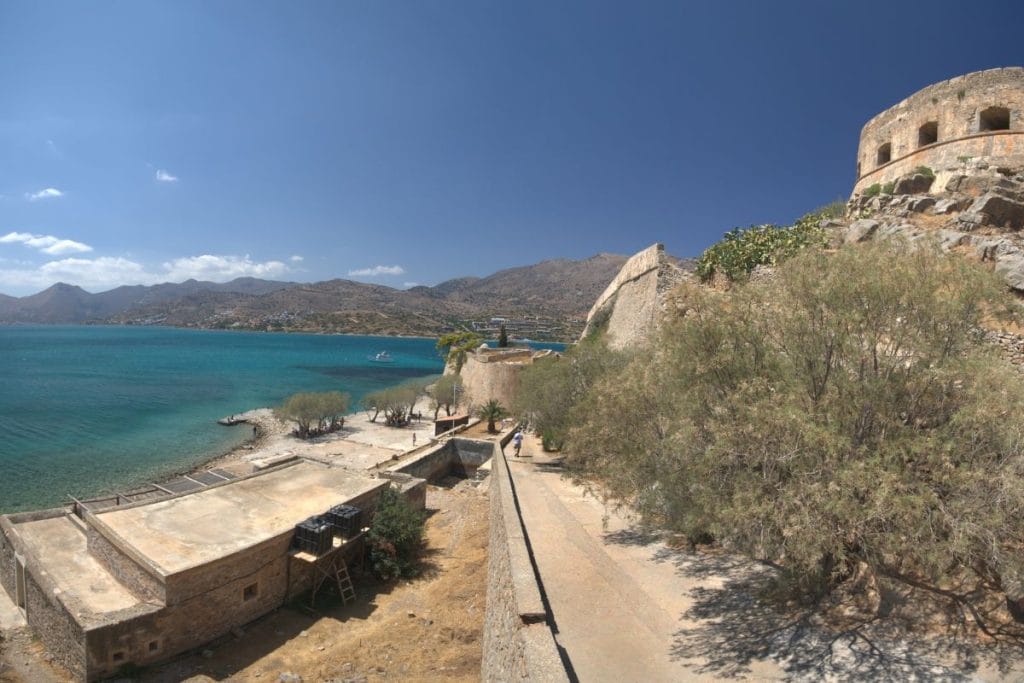
He left the island in 1952, five years before the colony closed. By then the new drugs had begun to empty the island, and in 1957 the last patients were moved to the Agia Varvara leprosy hospital in Athens. The final resident, the priest Chrysanthos Katsoulogiannakis, stayed until 1962 to complete the memorial services for the dead.
What treatment was possible
For most of Grammatikakis’s years there was no cure to give. No effective drug against leprosy existed anywhere until the sulfones of the 1940s, so his work was mainly to record, to manage and to keep order. He oversaw the state allowance paid for each patient and the disinfection routine that governed every visit to the island.
He is remembered today largely through the patients he treated and ruled. The testimony that Maurice Born later recorded from Epaminondas Remoundakis, now kept in the Ephorate’s archive, is among the few first-hand accounts of how the colony was actually run from day to day.
The hospital where Emmanouil Grammatikakis worked still stands on the island, close to the disinfection room where visitors had their hands washed before they left. Both lie on the marked route that begins at the tunnel entrance, where new arrivals once read the words carved above the passage.