
Epaminondas Remoundakis: The Law Student Who Rebuilt Spinalonga
Table of Contents
Introduction
In 1936, a 21-year-old law student named Epaminondas Remoundakis arrived on Spinalonga as a leprosy patient and changed the island for good. Within a few years he had organised its residents into the first patients’ association in Greece and turned a place of neglect into a working community.
From Sitia to Athens
Epaminondas Remoundakis was born in the village of Agia Triada, near Sitia in eastern Crete, in 1914. He set out to become a lawyer like his older brother Emmanuel, but in 1926, at the age of 12, he was diagnosed with leprosy.
He hid the small mark on his arm, kept studying and fled to Athens, where he enrolled in the law school of the University of Athens and dodged the police who were then hunting leprosy patients. His sister Maria and another brother, George, a doctor, had the disease as well.
His illness was discovered while he was a third-year law student, and he was confined first to the Agia Varvara leper hospital in Athens. A few months later he chose to move to Spinalonga, where his sister already lived, arriving on 11 March 1936, according to the Ephorate of Antiquities of Lasithi.
In Athens, Epaminondas Remoundakis and his sister Maria were treated at the Pasteur Institute, where the small mark on his arm faded for a time. The reprieve did not last, and the disease returned to shape the rest of his life.
The Brotherhood of the Sick of Spinalonga
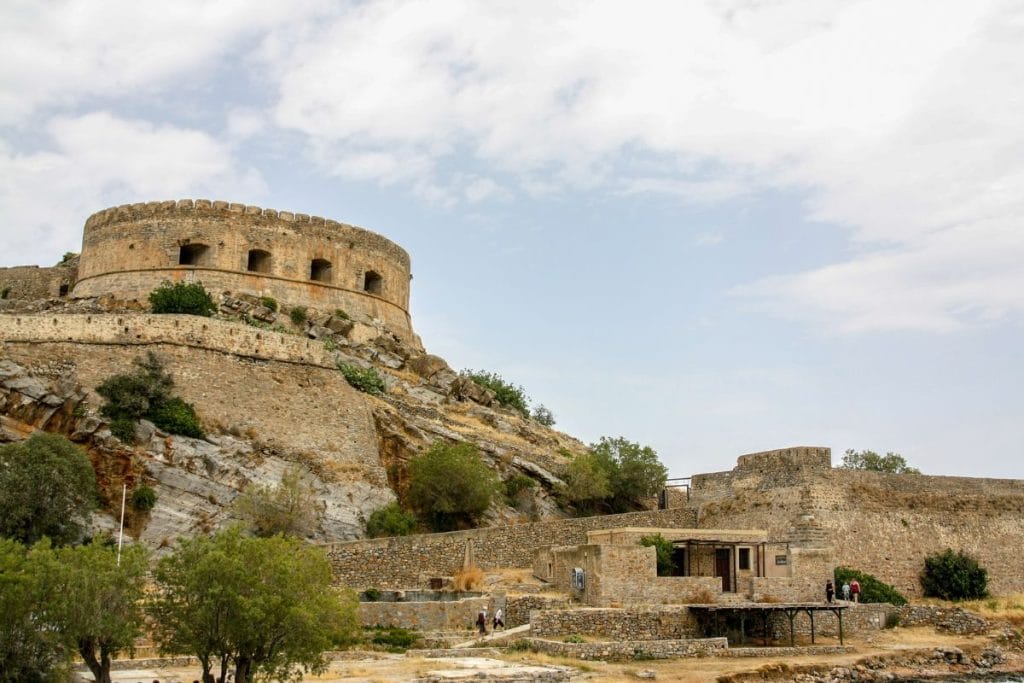
Epaminondas Remoundakis founded the Brotherhood of the Sick of Spinalonga, Saint Panteleimon, the first patients’ association of its kind in Greece. Its charter set out to improve living conditions and to secure, in its own words, “all means of culture that could alleviate the misery and despair of the sick.”
Under its pressure the state whitewashed the houses, opened a cleaning service and improved basic care.
The Brotherhood did more than petition. Remoundakis took on politicians of the day and spoke to the journalists who occasionally reached the island, and the residents held demonstrations for better conditions. As more educated young patients arrived, the association’s demands grew sharper and harder to ignore.
A working community
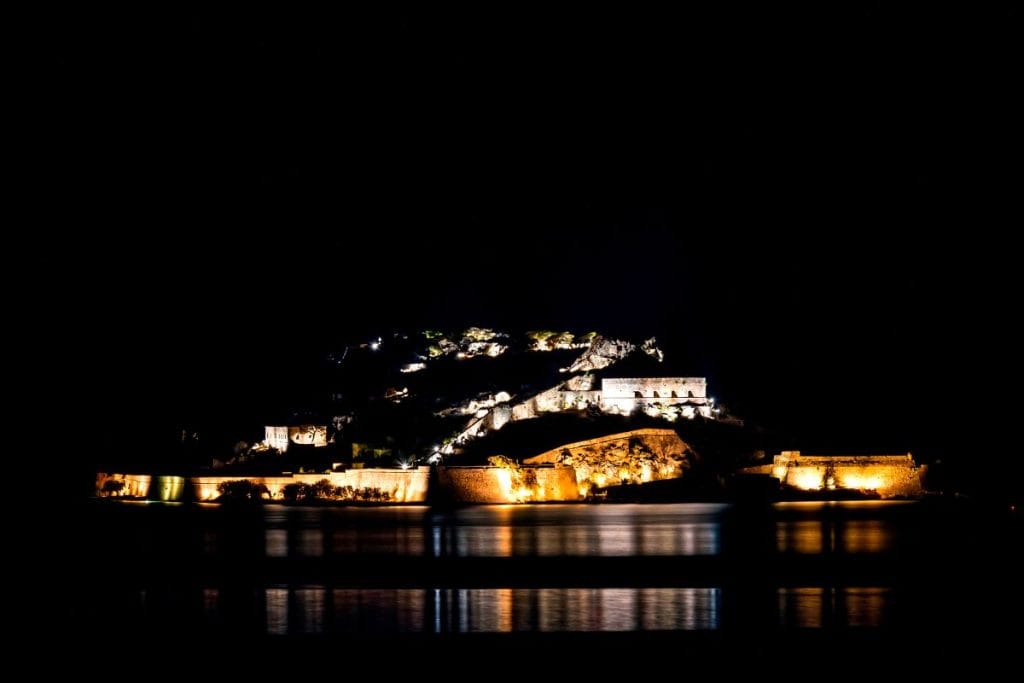
The changes were concrete. Residents built a theatre, a cinema and a school, ran cafes and shops, married and raised children who grew up healthy. A generator lit the streets at night, and a loudspeaker carried classical music through the settlement. According to the International Leprosy Association, 954 people were living on Spinalonga in 1933, and this was the society they slowly built.
Children born healthy on the island were taken away to orphanages on the mainland, one of the hardest rules of colony life. Even so, residents ran their own small economy, buying produce from boats at the dock and earning from their own trades. For the first time many of them owned a home and a livelihood of their own.
The residents also won small freedoms. In 1938 part of the surrounding wall was pulled down so that patients could walk the whole island, a change the Brotherhood had pushed for. Weddings in the church of Agios Panteleimon and name-day feasts became ordinary events.
Blindness and the memoir
The disease gradually cost Epaminondas Remoundakis his eyesight. In the early 1970s the Swiss ethnographer Maurice Born met him while filming the documentary L’Ordre with Jean-Daniel Pollet, and recorded dozens of hours of his testimony on tape. Those recordings, transcribed in Greek and reread with him, became his memoir.
It appeared in Greek as An Eagle Without Wings and in French as Spinalonga: Lives and Deaths of a Cretan Leper. Remoundakis had left Spinalonga in 1957, when the colony closed, and moved with his wife Anastasia to the Agia Varvara hospital in Athens. He died there in 1978. His account remains the fullest first-hand record of the colony from the inside.
The film that recorded him
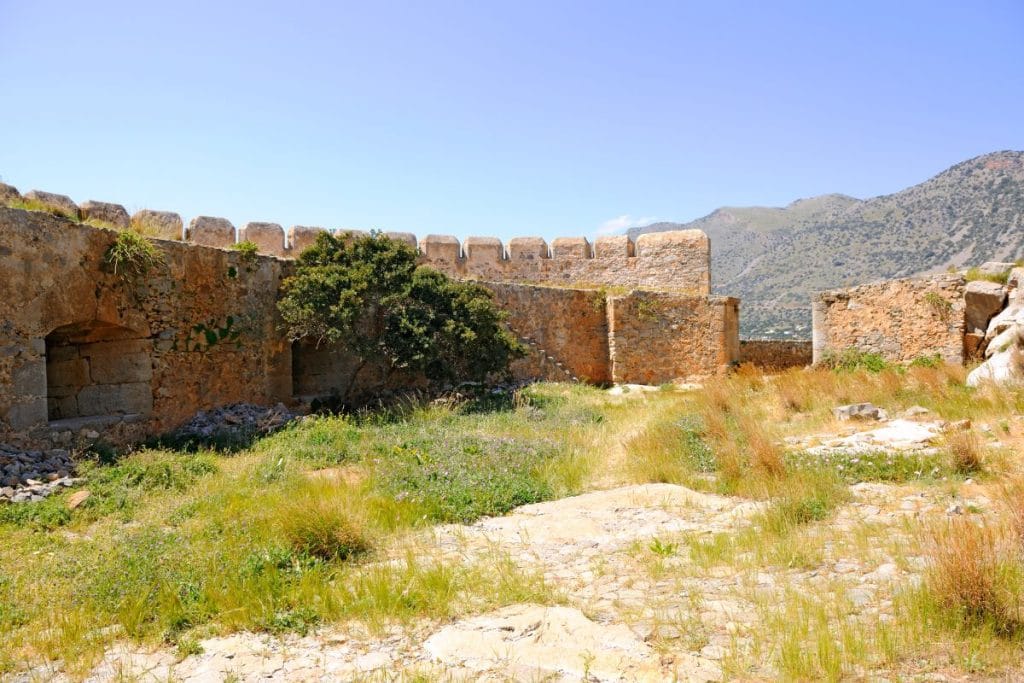
The recordings grew out of cinema. In the early 1970s Maurice Born worked on the documentary L’Ordre, directed by Jean-Daniel Pollet about the survivors of Spinalonga, and it was there that he met Epaminondas Remoundakis. Born spent the years that followed trying to tell the island’s unofficial story, drawn from the patients rather than the tourist version.
Epaminondas Remoundakis had married on the island, and his wife Anastasia left with him when the colony closed in 1957. The generation raised in the colony carried its memory quietly for decades, until Born’s book and later Victoria Hislop’s novel brought the story to a wide public.
The house fronts, the church and the ruined theatre he fought for still stand on the visitor route today. His recorded voice, kept in the Ephorate’s archive, lets visitors hear the colony described by one of the people who lived it.